Deadlifts are a fundamental movement we all perform regularly, but as an exercise in the gym, they’re often misunderstood. If your mind immediately jumps to images of giant grunting powerlifters and staggering weights – we’re here to change your perspective!
The reality is that deadlifts are just picking something up from the floor with good form. Think lifting a heavy suitcase, moving furniture, or picking up a child.
What Are the Benefits of Deadlifting?
In a nutshell, the deadlift is a full-body powerhouse:
– It primarily targets your posterior chain—that’s the elegant term for the muscles on your backside, including your glutes, hamstrings, and lower back.
– It also works your core, grip, shoulders and even your quads.
– And as a bonus, it improves your posture.
Different variations can help you target specific muscles, work around any niggles, or simply keep your workouts fresh and exciting. We’ll walk through some of the most popular deadlift variations so you can discover which one works for you.

The Conventional Deadlift: The Gold Standard
This is the classic deadlift you’ll most often see.
- What it focuses on: The conventional deadlift is a fantastic all-rounder, but it focuses primarily on your lower back and hamstrings.
- Who it’s for: Anyone looking to build overall full-body strength, provided they have good mobility in their hips and hamstrings.
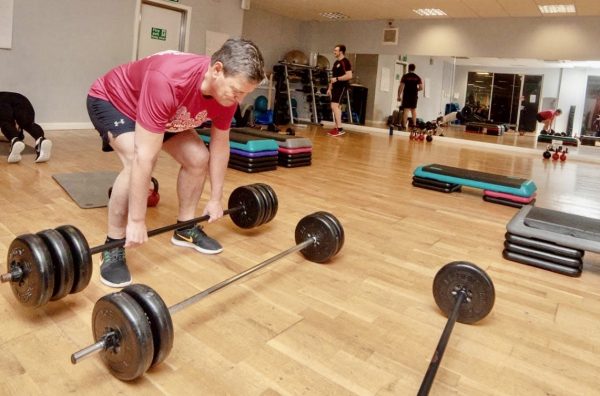
- Quick tips on form: Stand with your feet hip-width apart, with the bar over the middle of your feet. Hinge at your hips and bend your knees to grip the bar just outside your legs. Keep your chest up and your back straight. Take a deep breath, brace your core as if you’re about to be punched in the stomach, and drive through your heels to stand up tall. Push your hips back to lower the bar with control.
The Sumo Deadlift
If you’ve ever seen a lifter deadlifting with a super-wide stance, that’s known as the sumo!
- What it focuses on: The sumo deadlift puts a greater emphasis on your quads and glutes, with a slightly reduced range of motion for your lower back. It’s brilliant for building strong legs.
- Who it’s for: Those with longer legs or a history of lower back discomfort might find this variation more comfortable. It’s also excellent for adding variety to your leg day.
- Quick tips on form: Take a very wide stance, with your toes pointing out at about a 45-degree angle. Your shins should be vertical, and you’ll grip the bar inside your legs. The movement is similar to the conventional deadlift but think about “spreading the floor” apart with your feet as you drive up.
The Romanian Deadlift (RDL)
Meet the RDL, the best variation for building strong hamstrings and glutes.
- What it focuses on: This variation is all about the stretch and contraction of the hamstrings and glutes. Unlike the conventional deadlift, you start from the top and focus on the “lowering” phase, keeping your legs mostly straight.
- Who it’s for: Absolutely everyone! It’s a superb accessory movement to improve your main deadlift and a standalone star for building a resilient posterior.
- Quick tips on form: Stand tall holding the barbell (or dumbbells) in front of your thighs. With a slight softness in your knees, hinge at your hips, pushing your bum back behind you. Keep the bar close to your legs as you lower it until you feel a deep stretch in your hamstrings—no need to touch the floor. Squeeze your glutes hard to return to the starting position.
Ready to Start Your Deadlift Journey?
If you need help getting started, why not get in touch with one of our team as well as our friendly personal trainers? All our fitness instructors and personal trainers are fully qualified to give you the best advice and gym instruction. Furthermore, they can help you work around your injuries or any other physical condition you may have that requires a different training approach to conventional movements.
Start light, focus on perfecting the form first, and don’t be afraid to try different variations. Now, it’s time to go and pick something up!